March 13, 2026 ~ Kristin Burchfiel
It’s Saturday morning in Moncalieri, Italy, and the Church of the Nazarene’s building is bustling with energy in this town situated at the foothills of the picturesque Italian Alps. The aroma of coffee brewing brings smiles to many faces as Pastor Matteo Ricciardi visits with neighbors and the church’s food distribution program participants out front, in the place that has become a gathering space for the neighborhood in recent years.
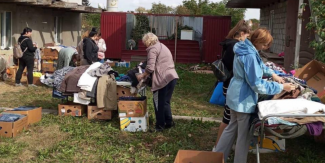
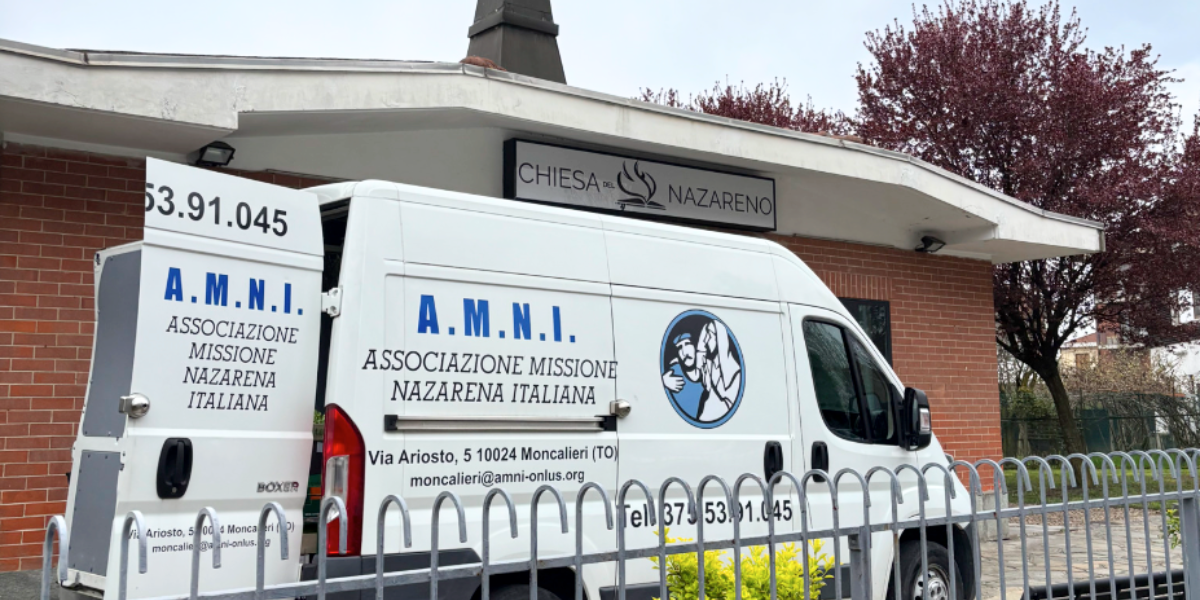
Just off to the side, the church’s recently purchased van has arrived, full of fresh food donated from nearby supermarkets. Volunteers have formed an assembly line to unload and sort the food for each family that will arrive today to collect it.
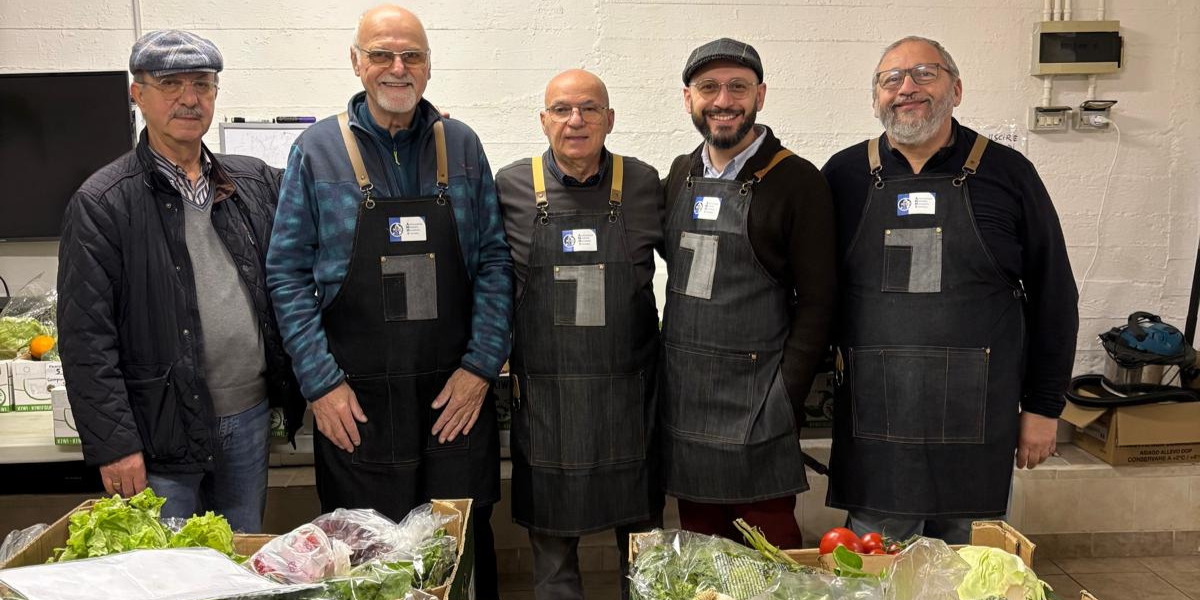
And so it goes every Saturday with this group, half of them church members and the other half community service workers, serving as part of the church’s agreement with the local court system to provide community service opportunities for those needing to complete their required hours.
The Saturday morning routine highlights the real value of this program: creating community. In an effort to bridge the gap for those who cannot afford enough food on a regular basis, a network of people from the church, the neighborhood, local supermarkets, the national food bank, and the court system has emerged.
Like many places around the globe, Moncalieri has a mix of long-term residents and immigrant families. Growing national poverty and unemployment rates have created a greater need for food assistance, particularly among the most vulnerable groups.
Then, in April 2020, the COVID-19 pandemic lockdowns exacerbated the situation, with many families experiencing financial hardship due to job closures and restrictions. This is when the church decided they could do something to serve their neighbors.
What began as a small, self-funded initiative has developed into a structured support program, thanks to partnerships with local stores and Italy’s national food bank network operated through the Italy District Church of the Nazarene’s non-governmental organization (NGO), Associazione Missione Nazarena Italiana (AMNI). As public social services face increasing strain, the initiative now provides essential aid to families and individuals in need, and the congregation has become a vital resource for those in vulnerable situations.
“Our congregation recognized this need and stepped in to provide support ... that is particularly useful because it serves as support for immigrant families who may face additional barriers in accessing social services, and it promotes community solidarity by bringing people together and responding to immediate needs,” explained Pastor Matteo.

As relationships continue to grow and develop, so do the operations. In partnership with Nazarene Missions Teams and a team from the Chicago area, the church recently remodeled its sanctuary space to create more room for their food distribution warehouse. Additionally, in partnership with Nazarene Compassionate Ministries, stainless steel shelves and a high-capacity refrigerator were purchased.
The congregation was also able to purchase a van that helps with ease and efficiency for picking up food and unloading it into the warehouse, instead of volunteers using their personal vehicles to go around collecting food each week. “With the customization with lettering (on the van), the service is gaining a higher visibility ... testifying to the church’s presence in the neighborhood,” explained Pastor Mateo.
One volunteer has seen the opportunity to share his faith with the community. “The good witness we give makes some people ask us why we engage in this service,” he said. “They are intrigued by our community, and also through other gatherings, we really manage to give witness to the neighborhood.”
As God continues to grow and bless this ministry, the church hopes to expand its reach. Thanks to the van, the capacity to collect and distribute food has increased, and the church hopes to be able to serve more people each week, reducing the number of families currently on the waiting list.
In the end, though, the goal remains to be a faithful presence in the neighborhood and to have a holistic impact on the lives of those around them. Pastor Matteo says, “In addition to food distribution, the program aims to raise awareness of the church’s mission and foster deeper connections with neighbors, and to provide spiritual and emotional support through community.”
This story adapted from the latest issue of NCM Magazine. Read more stories of hope here.
Most Popular Blogs